LivingToxFree
The kitchen is where health-conscious choices pay off the most — and where some of the most persistent chemical exposures quietly happen. From PFAS-coated pans releasing fumes at high heat to plastic containers leaching hormone-disrupting compounds into leftovers, the average American kitchen contains a surprising number of toxic offenders worth eliminating. The encouraging news: most of the meaningful swaps are straightforward, affordable over time, and backed by solid science.
This guide serves as the master resource for the LivingToxFree Food & Kitchen category. It maps every major area of concern — cookware, bakeware, food storage, water quality, and kids' tableware — explains the core risks in plain language, and links out to our in-depth reviews for each subtopic. Whether you are starting from zero or fine-tuning a kitchen that is already mostly clean, this is your roadmap.
Why the Kitchen Deserves Special Attention
Food preparation involves heat, acid, fat, and water — conditions that accelerate chemical migration from materials into food. A cutting board that is inert at room temperature behaves very differently when hot tomato sauce sits on a scratched surface for 30 minutes. The toxic buildup effect is especially relevant here: no single exposure is catastrophic, but daily low-level contact with multiple sources compounds quickly across a lifetime.
The kitchen is also the room where children spend significant time, where food is stored for hours or days, and where tap water is consumed in its largest daily quantities. Small changes in this one room can meaningfully reduce your household's total chemical load.
Cookware: The Highest-Heat Problem
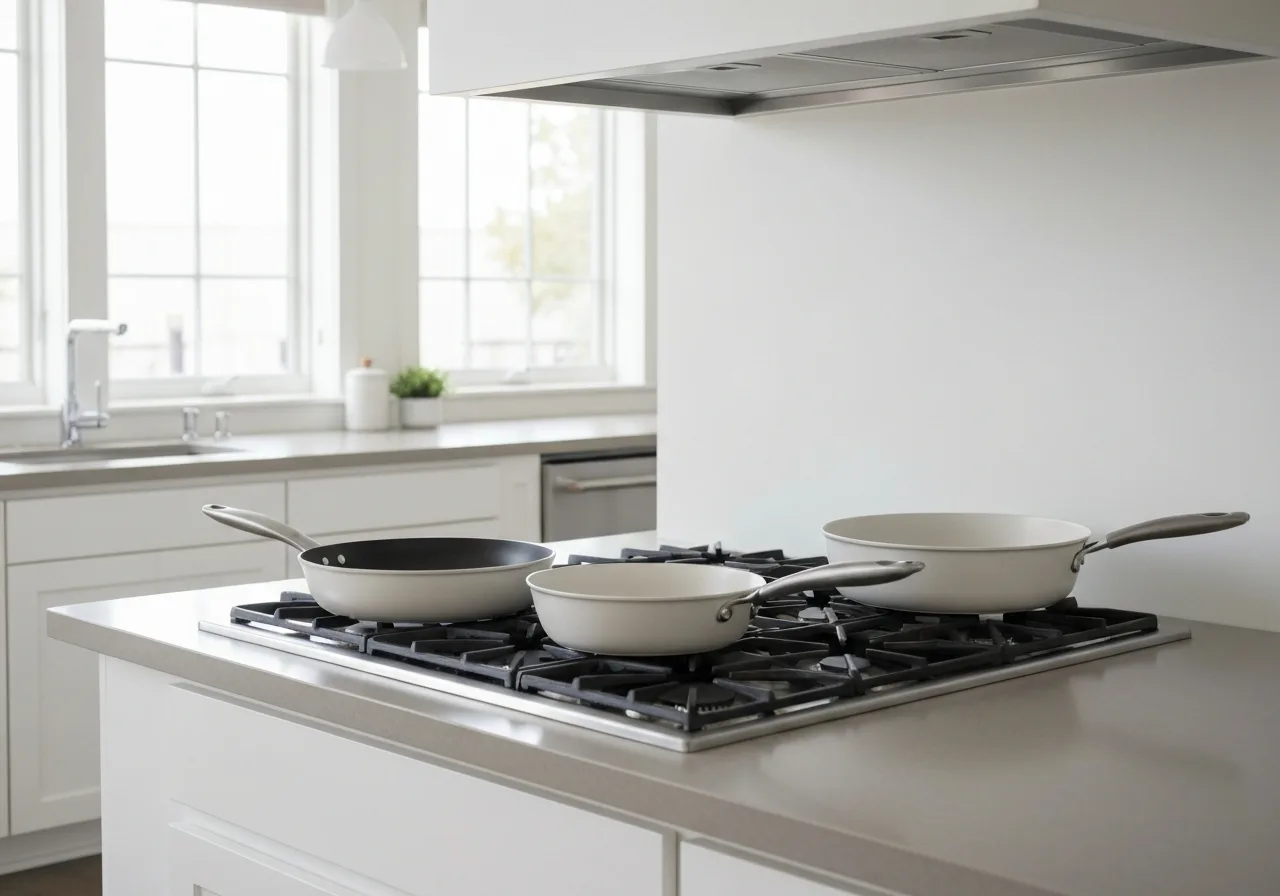
Of all kitchen upgrades, cookware is where the science is most clear-cut. Conventional nonstick pans coated with PTFE (marketed as Teflon and dozens of other brand names) belong to the PFAS chemical family — a group the EPA has linked to immune, thyroid, and reproductive concerns. When overheated, PTFE coatings can release fumes detectable even at moderate cooking temperatures, and scratched coatings shed particles directly into food.
For a full breakdown of what the research says, see Is Nonstick Cookware Toxic? (PFAS & Teflon Explained). If you want a direct side-by-side of the safest alternatives, Ceramic vs. Stainless Steel Cookware: Which Is Safer? covers the tradeoffs in detail, and our curated Best Non-Toxic Cookware guide includes vetted picks across every budget.
If you still want a slippery cooking surface without legacy PFAS, newer ceramic-coated and PTFE-free pans are a viable middle ground — see our Best PFAS-Free Nonstick Pans roundup for what to look for on the label.
Bakeware: The Overlooked Category
Bakeware spends extended time at high oven temperatures, making coating integrity critical. Many conventional sheet pans and muffin tins carry the same PFAS-based nonstick coatings as skillets, while some silicone and aluminum options raise their own questions. Our dedicated Best Non-Toxic Bakeware guide covers which materials hold up over time and which to avoid.
Food Storage: Plastic Is the Biggest Daily Exposure
Plastics are the single most widespread chemical source in the modern kitchen. BPA once dominated the conversation, but the plastics that replaced it — including BPS and a range of phthalates used as plasticizers — carry similar endocrine-disrupting profiles. Heat, acidic foods, and physical wear all accelerate leaching. Are Plastic Food Containers Safe? walks through the science in full.
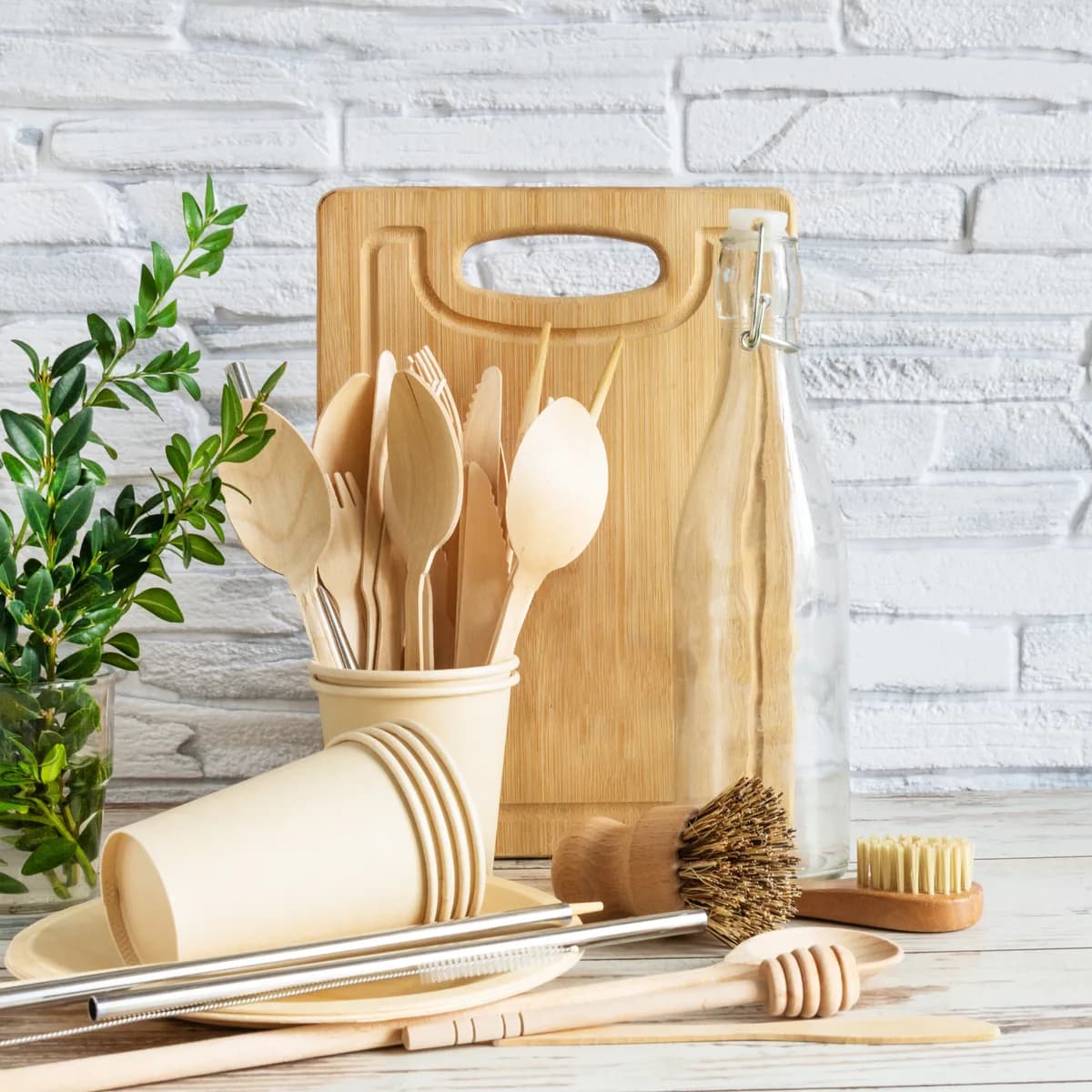
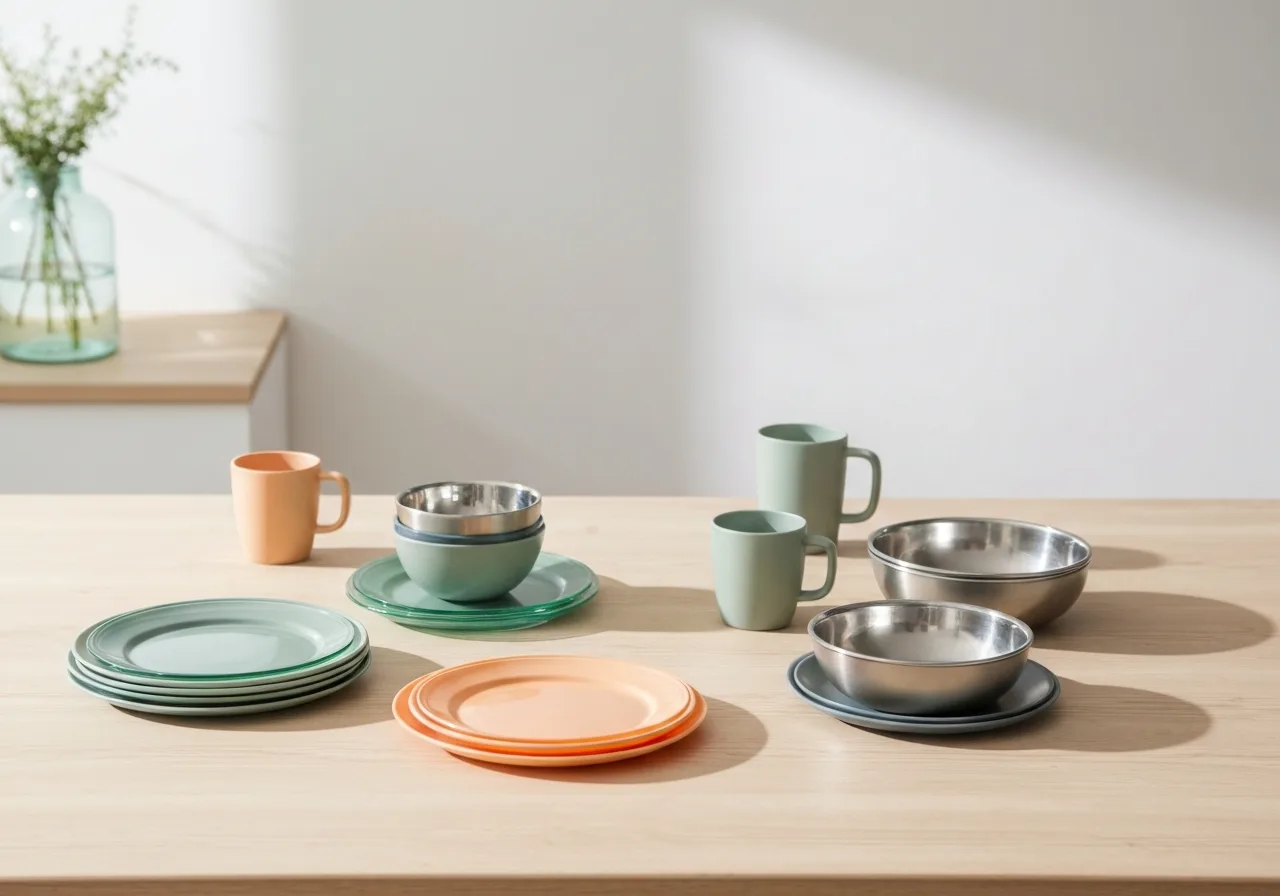
The practical solution is largely replacing plastic containers with glass, stainless steel, or food-grade silicone alternatives. Our Best Glass Food Storage Containers (Plastic-Free) guide identifies the top-rated options by use case, from meal-prep bowls to leak-proof lunch containers. For a room-by-room approach to eliminating plastic throughout the kitchen — including wraps, cutting boards, and utensils — follow the How to Detox Your Kitchen of Plastic step-by-step plan.
Water: What Comes Out of the Tap Matters
Unfiltered tap water in many US municipalities contains detectable levels of PFAS, chlorination byproducts (trihalomethanes), nitrates, lead (especially in older homes with legacy pipes), and microplastics. These are not hypothetical risks — the Environmental Working Group's tap water database documents documented contamination in water systems serving tens of millions of Americans.
Choosing the right filter depends on your specific contaminants, flow needs, and budget. Pitcher filters handle light-duty needs; under-sink reverse osmosis systems address a much broader contaminant range. Our Best Non-Toxic Water Filter for Home guide compares both categories with NSF-certification guidance so you can shop with confidence.
Kids' Dishes and Utensils: A Category That Demands Extra Care
Children eat more food relative to body weight than adults, and their developing systems are more sensitive to hormone-disrupting chemicals. Melamine plates, plastic sippy cups, and bamboo composite dishes have all drawn scrutiny for formaldehyde and melamine migration. For safe alternatives, see Best Non-Toxic Kids Plates & Utensils.
Quick-Reference: Non-Toxic Kitchen Material Guide
| Kitchen Item | Materials to Avoid | Safer Alternatives |
|---|---|---|
| Skillets & saucepans | PTFE/Teflon, unknown ceramic coatings | Cast iron, 18/10 stainless steel, verified PFAS-free ceramic |
| Bakeware | PTFE-coated tins, dark anodized aluminum with coatings | Uncoated carbon steel, pure ceramic, borosilicate glass |
| Food storage | All plastics, especially #3, #6, #7 | Borosilicate glass, 304 stainless steel, food-grade silicone |
| Water | Unfiltered municipal or well water | NSF-53/58 certified pitcher or under-sink filter |
| Kids' dishes | Melamine, BPA plastic, bamboo composite | Stainless steel, tempered glass, solid silicone |
| Cutting boards | Thin plastic boards (prone to grooves) | End-grain hardwood, thick polypropylene (replaced regularly) |
Prioritizing When You Can't Replace Everything at Once
A full kitchen overhaul is neither necessary nor realistic for most households. The smartest sequence is: (1) replace the most heavily used cookware first, since it contacts food daily at high heat; (2) swap plastic storage containers for glass starting with anything that holds hot food; (3) add water filtration; (4) address bakeware and smaller items over time. For a broader framework on prioritizing non-toxic changes across your budget, Toxin-Free on a Budget offers a practical decision hierarchy.
When reading product labels and marketing claims — "non-toxic," "eco-friendly," "clean" — it pays to understand what those terms legally mean and what they don't. Decoding Product Labels gives you the vocabulary to cut through greenwashing.
The Bottom Line
A non-toxic kitchen is not about perfection — it is about systematically reducing your highest-frequency exposures over time. Cookware, food storage, and drinking water are the three pillars that affect nearly every meal you prepare, and meaningful upgrades in each area are available at a range of price points. Use the dedicated guides linked throughout this article to go deep on any category that applies to your household, and return to this page whenever you need a birds-eye view of where the kitchen hub fits into your overall non-toxic living strategy. The Food & Kitchen category page keeps all of these resources organized in one place as new research and product updates emerge.