LivingToxFree
Nonstick pans have earned a permanent spot in millions of American kitchens — and it's easy to see why. Eggs slide off effortlessly, cleanup takes seconds, and you can cook with less oil. But a growing body of research has raised legitimate questions about the chemicals that make that slick surface possible. If you've been wondering is nonstick cookware toxic, you're not alone, and the answer deserves more nuance than a simple yes or no.
The concern centers on a class of synthetic chemicals called PFAS — per- and polyfluoroalkyl substances — which include the well-known compound PTFE (sold under the brand name Teflon). Understanding exactly what these chemicals are, when they pose a risk, and what the current evidence actually says will help you make a genuinely informed decision rather than a fear-driven one. This guide covers the science clearly, without the scare tactics.
What Are PFAS and Why Are They in Your Pan?
PFAS is an umbrella term for thousands of man-made chemicals characterized by extremely strong carbon-fluorine bonds. That bond is precisely what makes them so useful in cookware: it creates a surface that is highly heat-resistant, nearly frictionless, and chemically inert under normal conditions. The most widely used PFAS compound in nonstick coatings is polytetrafluoroethylene (PTFE), commercially known as Teflon, a brand owned by Chemours.
PTFE itself is considered chemically stable at typical cooking temperatures. The more significant concerns historically involved a processing aid called PFOA (perfluorooctanoic acid), which was used to manufacture PTFE coatings. PFOA has been linked in epidemiological studies to thyroid disruption, elevated cholesterol, kidney disease, and certain cancers. Responding to regulatory pressure, US manufacturers phased out PFOA by 2013. Today's Teflon-branded products are PFOA-free — but PFAS as a category remains broad, and the replacement chemicals (sometimes called "GenX" or short-chain PFAS) are still under active scientific scrutiny.
To understand why even "small" chemical exposures matter in the big picture, see our deep dive on the toxic buildup effect.
The Real Risk: Overheating and Coating Degradation
At normal cooking temperatures (below about 500°F/260°C), intact PTFE coatings release negligible amounts of compounds, according to both the EPA and independent toxicological reviews. The risk profile changes meaningfully when pans are overheated. At temperatures above 500°F, PTFE begins to degrade and can release ultrafine particles and gaseous byproducts. At temperatures above 570°F, a documented condition called polymer fume fever — flu-like symptoms in humans — has been reported in occupational settings. At extreme temperatures exceeding 680°F, more toxic decomposition products can form.
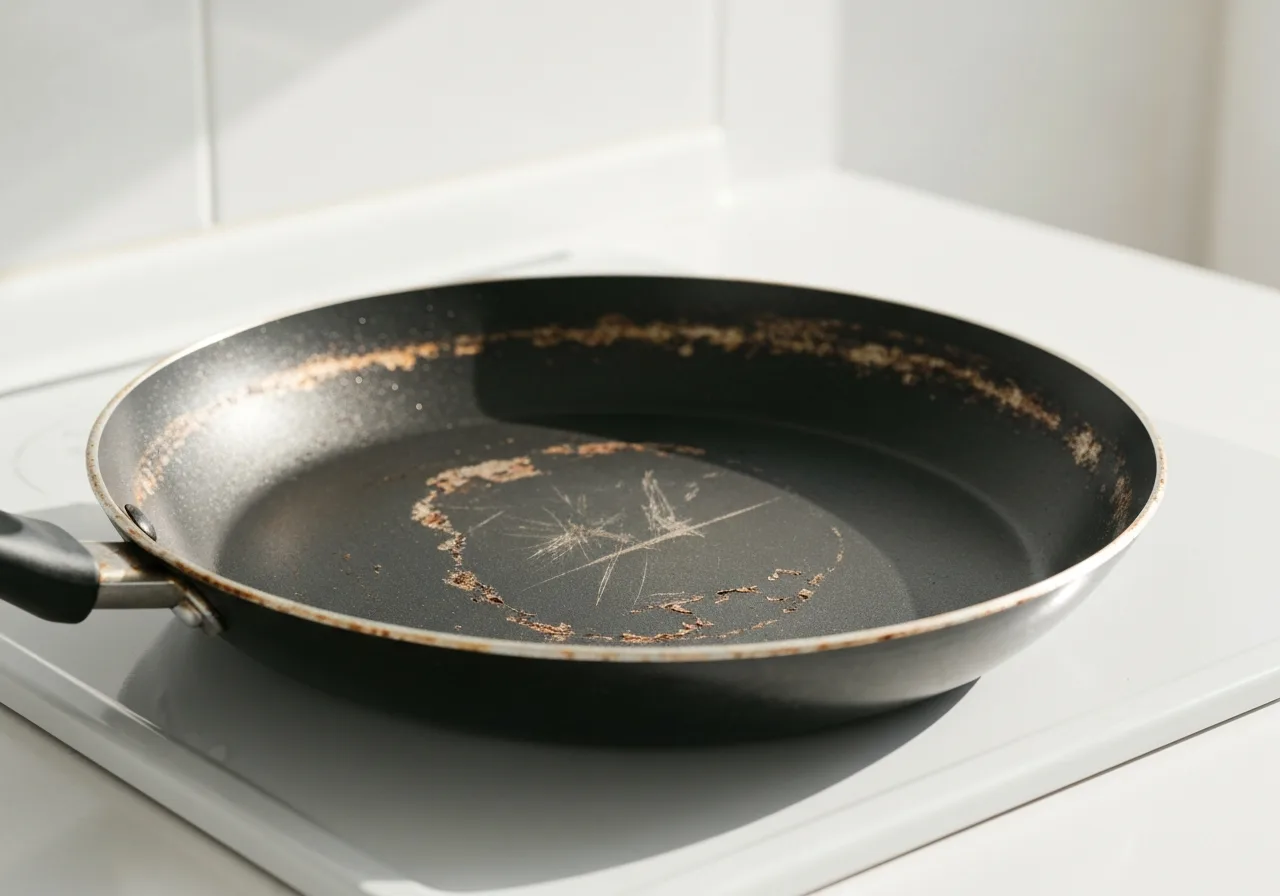
The practical takeaway: an empty nonstick pan left on a high burner can reach dangerous temperatures in minutes. Cooking with food in the pan at medium heat is a very different scenario. Still, if your pan shows signs of scratching, peeling, or significant wear, the risk of ingesting coating particles rises — and replacement is warranted.
PFAS Beyond the Pan: The Persistence Problem
One reason scientists and regulators pay such close attention to PFAS is their extraordinary environmental persistence — earning them the nickname "forever chemicals." Unlike many compounds that break down in the body or environment, PFAS accumulate in water supplies, soil, wildlife, and human tissue. The CDC's National Health and Nutrition Examination Survey has detected PFAS in the blood of the vast majority of Americans tested, reflecting both dietary and environmental exposure routes, of which cookware is just one.
This persistence is why regulatory agencies worldwide are tightening standards. The EPA set a Maximum Contaminant Level for several PFAS compounds in drinking water in 2024. If you're concerned about PFAS in your tap water, the most effective mitigation is a quality filtration system — our guide to the best non-toxic water filter for home covers which technologies actually remove PFAS.
PFAS also show up in food packaging, stain-resistant textiles, and personal care products. For a broader look at how pervasive hormone-disrupting chemicals are, see our coverage of hormone hijackers.
Comparing Nonstick Coatings: What's Actually on the Market
| Coating Type | Key Material | PFAS-Free? | Main Trade-off |
|---|---|---|---|
| Traditional Teflon (PTFE) | Polytetrafluoroethylene | No (PFOA-free since 2013) | Degrades when overheated or scratched |
| Ceramic nonstick | Sol-gel silica-based | Yes | Nonstick performance degrades faster over time |
| Hard-anodized aluminum | Oxidized aluminum layer | Yes | Not inherently nonstick; often has additional coatings |
| Cast iron | Iron (seasoned with oil) | Yes | Heavy; requires maintenance; not ideal for acidic foods |
| Carbon steel | Steel (seasoned with oil) | Yes | Learning curve to season properly |
| Stainless steel | Chromium-nickel alloy | Yes | Sticking without proper technique; minimal leaching concerns |
| PFAS-free "eco" nonstick | Varies (titanium, diamond-infused, etc.) | Verify by brand | Marketing claims vary widely; independent testing limited |
Note: "Ceramic nonstick" refers to a ceramic-like coating, not solid ceramic. Always verify PFAS-free claims with the manufacturer.
Is Nonstick Cookware Toxic for Children Specifically?
Children's developing endocrine and immune systems may be more sensitive to chemical exposures than adults. If you're cooking for kids, reducing PFAS exposure wherever practical is a reasonable precaution — even if the absolute risk from a single well-maintained pan is low. For guidance on safe plates and utensils for little ones, see best non-toxic kids plates & utensils.
Your Practical Path Forward
If you currently own nonstick pans: Stop using any pan with visible scratches, chips, or peeling. Avoid preheating an empty nonstick pan. Never use high heat. Ensure adequate kitchen ventilation. Replace pans every two to three years even without visible damage.
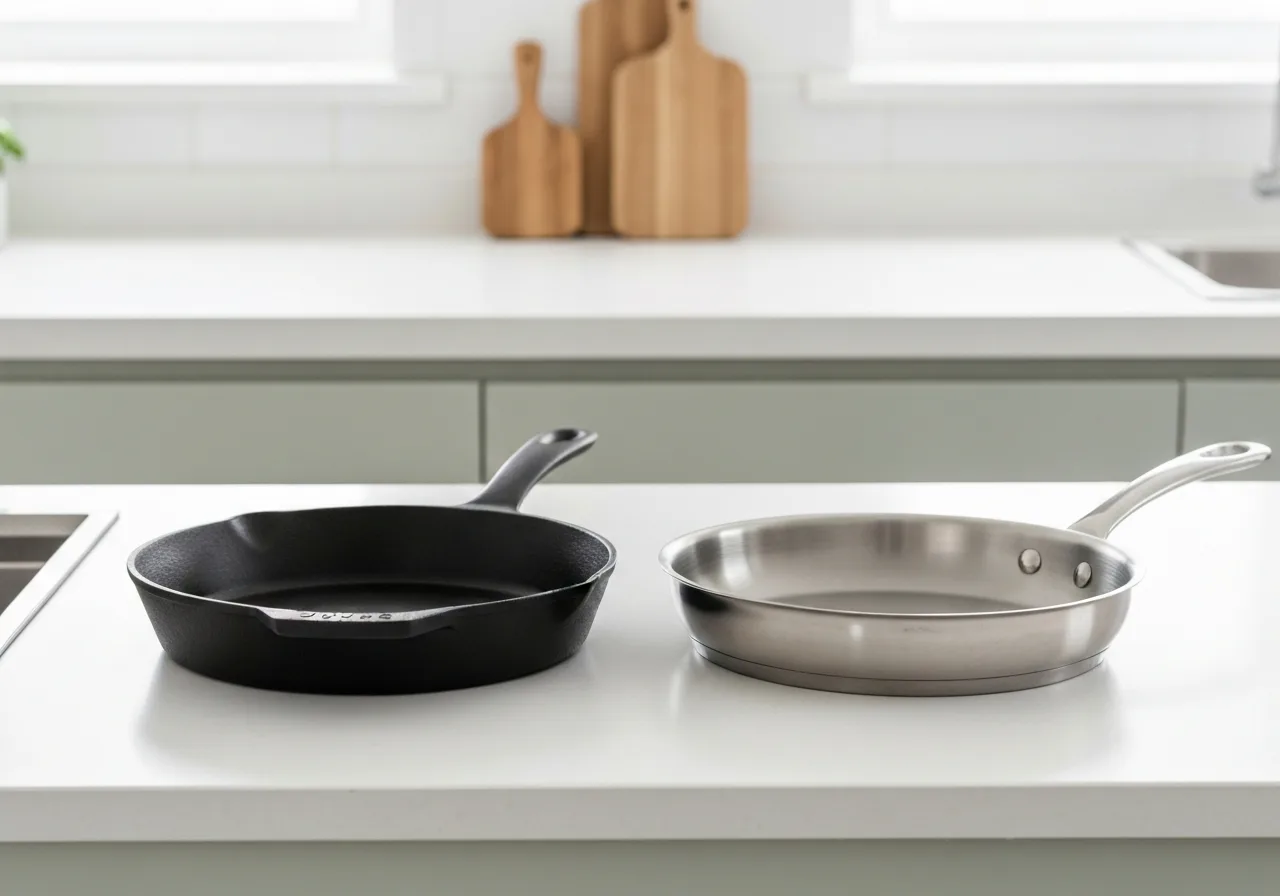
If you're ready to switch: Ceramic nonstick, stainless steel, cast iron, and carbon steel are all PFAS-free options with strong track records. Each has different strengths — for a head-to-head comparison, ceramic vs. stainless steel cookware is an excellent next read, and our best non-toxic cookware guide covers top-rated products across categories.
If you want PFAS-free nonstick performance specifically: Several brands now offer coatings verified free of PTFE and related compounds. We've done the testing and research — see best PFAS-free nonstick pans for vetted recommendations.
For a comprehensive look at the whole kitchen — storage, filtration, bakeware, and more — The Non-Toxic Kitchen is your complete reference. And if baking is a priority, don't miss best non-toxic bakeware, since PFAS coatings appear on sheet pans and muffin tins just as readily as on skillets.
The Bottom Line
So, is nonstick cookware toxic? The honest answer is: it depends on the coating, the condition of the pan, and how you use it. PTFE-based Teflon, used carefully at moderate temperatures in good condition, poses a low risk for most adults. The greater concern is the broader PFAS category — including manufacturing byproducts, replacement chemicals, and environmental accumulation — which is why regulators are increasingly restricting these compounds across industries.
The practical, evidence-based move is not to panic about the pan you used this morning, but to make a thoughtful transition toward PFAS-free cookware as your current pieces wear out. Prioritizing your highest-use pans first is both effective and budget-friendly — a principle that applies across your entire home, as outlined in our guide to going toxin-free on a budget. Small, strategic swaps add up to a meaningfully cleaner kitchen over time.